Devil May Sigh


My lazy ass has taken up fanart again, hardcore. I haven’t drawn much in awhile, and needed to get back into it, so I dove into some pieces that I’d left hanging months ago. The three that I’m currently working on are coming along well, so far, and I hope that I can shake off the last remnants of rust from my skills by the end of the month. What are they? Well, all I’ll say at the moment is that they involve Final Fantasy VII (of course) and two games I beat this year.

Having an account (and running a decently-sized group) at deviantART, I see a lot of others’ fanart on a regular basis. However, my favorite bit of recent fanart I saw on a forum; it’s the one to your right, which, via the “Reaction Guys” meme, is an accurate description of what many Devil May Cry fans felt when the Ninja Theory-developed reboot DmC was unveiled at the Tokyo Game Show last month. To whoever drew this very true reaction, I salute you.

Yeah, I don’t like Dante’s new look either. I’m also a bit wary about Ninja Theory taking the helm of this game, which will be the latest in a series which is traditionally action-packed, combo-heavy, and charmingly cheesy. From what I’ve heard about Heavenly Sword, it wasn’t all that, and early impressions of Enslaved have me suspecting that although DmC might have the Hollywood associations that Ninja Theory likes to include in their games, it probably won’t have the Devil May Cry series’ tricky controller gymnastics. So far, the funniest, weirdest, and scariest thing about DmC is how much the “new” Dante resembles the lead developer. Egad.

While DmC makes me sad, the blog Opposable Thumbs makes me happy. It’s one of a very few number of sites sites I’ve added to my daily games-related internet reading this year. I haven’t liked everything I’ve read there so far, but in general, it’s quality. Some recent pieces I would like to recommend are their history of the Civilization series, the much-discussed article on elaborate press goodies, the review of text adventure documentary Get Lamp, and, my favorite of these, a hands-on look at the latest Cabela’s hunting game.

To round things out, here’s some other recent articles, blog posts, etc. that I’ve found interesting. First off, it seems that Stephen Totilo and N’Gai Croal were at it again, asking developers to play their game “Canon Fodder”, the aim of which is to list the ten greatest games of all time. You might recall that I attended the first season panel at PAX East. It seems that PAX Prime 2010′s Season Two brought a lot of its own drama, especially since that stubborn Ocarina of Time was completely removed from the list. Good stuff, and I’m looking forward to Season Three come PAX East 2011 (hopefully). And speaking of PAX East 2011, registration is now open! Unfortunately, the hotel info isn’t up yet, but you can bet we’re booking as soon as it is.

Ian Bogost’s article Persuasive Games: Free Speech is Not a Marketing Plan looks at the recent controversy surrounding the Taliban’s role in the upcoming Medal of Honor game and laments on how easy it was for EA to deal with it. The most relevant bits were quoted in this GameLife post, if you just want a summary. On a lighter, and totally unrelated, note, Gabe’s promo art for Comic Jumper (second post down) is a hilarious—and well drawn!—homage to the horrible but distinctive comic book work of Rob Liefeld.

Finally, some JRPG-related stuff. RPGamer posted a “retroview” of Final Fantasy VII that is honest and fair, though I don’t agree with the reviewer’s take on the field navigation. Meanwhile, Andriasang has posted some interesting and wonderful pics from Japan, namely a comparison between old-style Disgaea sprites and the new Disgaea 4 ones, and a drop-dead-adorable plush of Final Fantasy XIV moogle Kuplu Kopo.

I’m probably never going to play FFXIV, but I must have that moogle.


Me and Samus Aran


Metroid Prime was really good, if a little frustrating at times. The levels, very much including the in-between hallway bits, are incredibly varied, and the puzzles are genuinely interesting. Story bits are told via computer terminals and ruins, which can be scanned with a special visor; as such, there were very few cutscenes, which I liked. A lot of backtracking is required to collect all the doodads you need (and don’t), which got a little tedious at times, and at one point, I had to run to GameFAQs in order to progress (always a Bad Thing to me, though in this case, the solution was merely a little oblique instead of ludicrously buried, *cough*). Both enemies and environments require more elaborate battle tactics as the game wears on, which not only added to the difficulty but the variety. Also, the Wii controls for this first-person game are a dream come true, though I personally would’ve put the default jump control on the Nunchuck instead of the Wii Remote, similar to the Elebits scheme. I’m looking forward to playing the other two games in the Metroid Prime Trilogy set, though probably not right away, as my backlog is nearly all JRPGs again and I need, more than ever, action games to break things up.

Captain N isn't that kind of guy.

Metroid Prime was also my first Metroid game, believe it or not. However, thanks mainly to Nintendo and fandom, the game’s protagonist was already known to me, though I was not aware of much of the minutiae of her canon. Really, there aren’t too many hardcore gamers who don’t know of the bounty hunter Samus Aran, since, along with Lara Croft, she’s the most famous and iconic video game heroine out there. An important aspect of her is that she has traditionally been a silent protagonist in the games she appears in, much like Mario, Crono, and just about every main-series Dragon Quest and Pokemon hero. In fact, the only time I’ve seen her talk is in the old Nintendo Comics System books, where she is a calm/cool/collected hunter who macks on Captain N.

Recently, Metroid: Other M came out, featuring Team Ninja’s take on the character and her universe. I hadn’t really kept up with this game, but what reviews I’ve seen have been generally favorable. The one from the Onion AV Club got me wondering, though:

It might not sound like a big deal, but Other M focuses on Samus almost to the point of being a character study. In her many internal monologues throughout beautifully rendered cutscenes, the previously strong-and-silent Samus owns up to being petulant in her time with the Galactic Federation, to having misguided, unshakeable loyalties, and to dealing with daddy issues.

That didn’t sound like the Samus I (barely) knew. Turns out it was worse for a more experienced Metroid player at G4. I first heard about Abbie Heppe’s Other M critique via GJAIF, which quoted a Boing Boing article about the piece and its accompanying backlash. In summary, Heppe did not like the characterization of Samus, and took issue with the story itself; she also wasn’t satisfied with the control scheme and overall game design.

From what it sounds like, Samus was handled badly in Other M, and not just in the sense of a silent protagonist becoming chatty: Heppe logically points out as uncharacteristic Samus’ moments of fear when facing a certain enemy that’s a mainstay of the Metroid series. However, I believe this bit is just another fault of the overall approach as well. If I’m reading this right, it seems that Samus is a character whose thoughts and personality we didn’t know at all, but only interpret through what limited information we are given (sparse storylines and cutscenes, her equipment and enemies, etc.), with the rest up to us, the player. The Samus I saw in Metroid Prime was an independent and diligent explorer who seems not to care for the company of others. There’s doubtless many more interpretations of her out there (like her being a greedy and flirtatious sort, a la the Captain N story). An immature and doubtful Samus was not one I ever thought possible, especially not at the point in the canon that Other M takes place in.

Silent protagonists, especially ones that have been that way for as long as Samus has, must be handled carefully when given a voice and thoughts. I can only think of one other instance off the top of my head where a silent protagonist was given a significant personality injection, and the results were also inadequate; the Jak of Jak II was, unlike the original in Jak and Daxter, not someone I particularly liked. Mario might qualify, as he has been given voice in the past through cartoons and comics, but his in-game persona is still largely open to interpretation; at most, his speech is limited to very basic reactions (“uh-huh”, “no”, exclamations of surprise, etc.) and Italian gibberish.

Perhaps Samus should never have been given a personality in the first place, as that, traditionally, has been left up to the players to fill in for over twenty years. That lengthy time, and all the Metroid games filling it, have created many Samus Arans in the minds of uncountable numbers of gamers. Whittling down these many Samuses to one (and an apparently strange one at that) is a very dicey proposition at best. I hope the next Metroid allows us as gamers to once again see our own personal Samuses again.


Just a Brief Gaming Update


I finally got around to beating Halo last night. Real-life things, plus the absorbing magic of Dragon Quest V, had kept me away from it for awhile. There were also the Windows issues: that I had to boot into Windows to play it (I’m a Boot Camper), and that my desk is near some very sunny real windows, which in the latter case meant that play sessions were largely restricted to evenings.

Anyway, I enjoyed it. Continuing to be led by sidekick/moral center Jiminy Cortana, I got through a tough spot I had been stuck on, the last of the overly samey bits, and even spotted a Marathon reference in a cutscene. It was all quite entertaining, and I’d like to play more in the series, but there’s the problem of most of it being console-exclusive with no mouse and keyboard support. What would be the point of me playing Halo 2 PC if I can’t play Halo 3 PC? Still pondering my options here. Part of me’s thinking that since I had no problems that one time I played GoldenEye 007 on the N64 back in the day, I should have no real issues using a controller. On the other hand, I really do prefer mouse and keyboard control for first-person games (Wii Remote and Nunchuck are good, too, but that won’t happen for Halo 3, and something tells me Natal wouldn’t be comparable). Anyway, I think I’ll be playing FPSes more often again in general. Metroid Prime Trilogy‘s already in my backlog, and there’s several PC ones that Cyrus and I’ve got sitting around as well.

Dragon Quest V: A young hero's journey begins.Now, on to Dragon Quest V: Hand of the Heavenly Bride. I can’t say enough good things about this game. It is the best Dragon Quest I’ve played thus far, and is one of the best RPGs I’ve ever played, period. The world, dungeons, fighting, music, and so on is all typical highly-polished DQ goodness, but the story is where DQV really shines. Without giving away too much, the tale is about how a boy becomes a man, and the hardships and joys that he faces along the way. The game’s centerpiece, as hinted at by the subtitle, is the hero’s wedding. The events leading up to it and the eventual choosing of the bride (probably the only part in the game where the player’s actions have any real impact on the plot—keep in mind this is a JRPG!) are a little predictable, but an absolute pleasure to take in. This is a real gem of a game, and as such, it’s a little disappointing that it’s a remake, and thus a reminder that they don’t quite make ‘em like this anymore.

In the midst of all this, I got a beta code for StarCraft II! It came from Amazon, not long after word got out that some retailers would be including codes as preorder bonuses. My preorder for the Wings of Liberty Collector’s Edition was already in by that point, so I was good to go; the code was certainly a nice surprise to find in my inbox that morning.

I haven’t played all that much SCII Beta though. Well, I’ve played enough to check out some of the new units, especially the Protoss ones. However, I don’t like playing online much to begin with, so even just my feelings going in were mixed. Might mess around with it some more—but with a stronger focus on Terran and Zerg—before the beta ends, but it’s not a huge priority.

Finally, soundtracks! I’ve been on an OST buying spree, and with the number I’ve bought (and the amount I’ve spent), I think I’ll be set for awhile. Here’s what I’ve picked up:

  • Breath of Fire V: Dragon Quarter Original Soundtrack – This was pretty much what started this binge. The music was really good, and when I saw Hitoshi Sakimoto‘s name in the credits, well, then I knew why. I simply had to have this OST. Ordered from YesAsia, but they couldn’t get it, so I ended up buying it from Otaku.com instead.
  • Radiata Stories Original Soundtrack – Another so-so JRPG whose soundtrack I enjoyed semi-recently. Figured I might as well get this one, too, so I also ordered it from YesAsia. Had better luck, and currently it’s the only OST still en route.
  • Klonoa of the Wind 2 ~Something Forgotten Wished by the Wind~ Original Soundtrack – A long-time want. Ordered and arrived from Play-Asia.
  • Tales of Legendia Original Soundtrack – See note for Klonoa of the Wind 2, though the former was a higher priority.
  • Halo Original Soundtrack – I was familiar with some of the music already, but while playing the game, the whole OST impressed. Picked up at Amazon.com.
  • Devil May Cry 4 Original Soundtrack – Also bought via Amazon, but it’s not the Japanese release. Like the Halo OST, it’s published by Sumthing Else.
  • Chrono Cross Original Soundtrack – If you’ll remember, I recommended picking this up in lieu of the game itself. Listening to it right now; it’s damn good. Otaku.com only ships via EMS, which is expensive, so I tacked on a couple of other OSTs when I got the BoFV one from them. This was one of them.
  • Front Mission 5 ~Scars of the War~ Original Soundtrack – …and this is the other. Both are ones I had had my eye on anyway. This is also the only OST I’ve ordered that I haven’t heard anything from; however, I like the composer and love the series, so I don’t think I’ll be disappointed.

I also made a set of trades over at VGMdb recently: a couple of spare DDR demo disks for copies of the Grandia 2 bonus disk (which I already had a copy of, but one that was damaged to hell) and a DDR SuperNOVA/Ultramix demo disk (which is wholly new to my collection). It was my first trade conducted through the site and went swimmingly.

That’s all I’ve got for now. Don’t know what I’m going to do today, gaming-wise; I’m exhausted, so I’m kind of iffy about putting more time into Dragon Quest V. I (finally) checked out the Plants vs. Zombies demo last weekend and really enjoyed it, so maybe I’ll get that and do some lawn defense.


Are You Ready For Some Space Marines?!


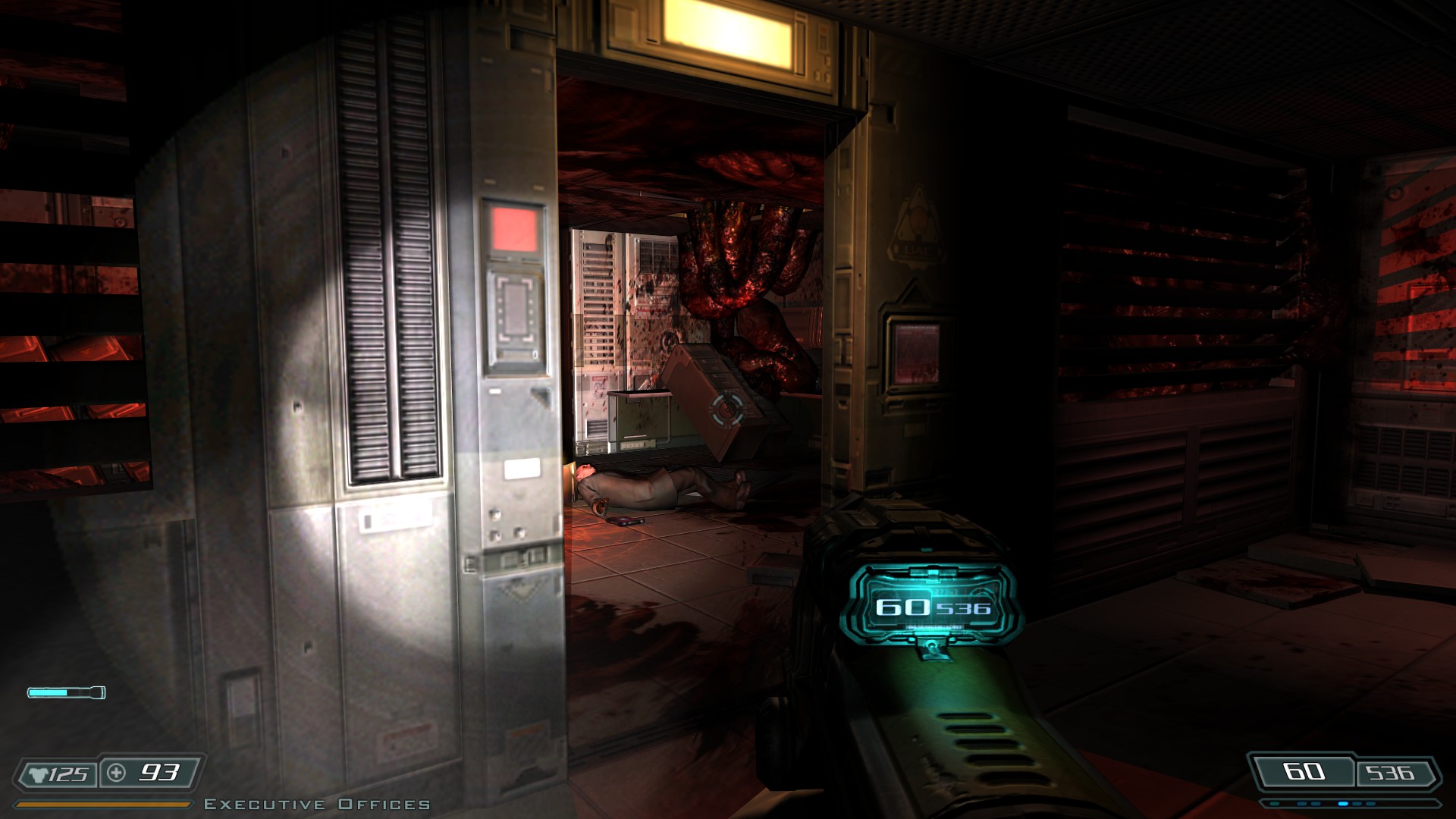
I was beginning to get burned out on RPGs, so yesterday, I installed and started Halo, one of the games on this year’s “must play” list. I say “installed” because it’s the PC port, which I’ve had for a long time, but never once touched. Having played FPSes since Wolfenstein 3D and Doom, I’m most accustomed with traditional computer controls; replacing WASD and a mouse with analog sticks is anathema to me.

That aside, Halo is clearly a previous-gen console game with traditional PC FPS window dressing, going by its aesthetics and limitations. This isn’t necessarily a bad thing, though. The graphics, as straightforward and colorful (albeit with a selective palette) as they are compared to other FPSes from back then, bring to mind much of Blizzard’s work, and certain limitations—namely, that the player can only carry two weapons at a time—lend an additional layer of challenge. Overall, an enormous amount of craft and care is on display, and although Halo remains the most overhyped game of the ’00s, it’s also hard to hate.

The world of Halo.As every gamer knows by now, the player character is the nondescriptly-named Master Chief, a human marine fighting against the alien Covenant on a far-off world. His physical build is strong but not very distinctive, and he is completely covered by armor, right down to the reflective gold mask that hides his face. I’d always gotten the impression that his name and outward appearance were designed as such so that anyone could slide into his shoes, and had thus assumed that he was mute. However, he does have your typical tough-guy voice to match his special armor. Despite this, to his credit, he retains much of his blank-slate persona, and is as inoffensive and plain an avatar as I ever saw one.

The alien enemies are inoffensive as well—I’m a few hours in, and it looks as though I’ll never have to turn my guns against other humans. The grunt-level Covenant come across as cartoonish, what with their dwarven builds and high-pitched voices which wouldn’t be out of place in Worms, but the tougher ones have a certain lightness about them as well. No one would ever mistake Halo for hard sci-fi. Rather, it’s pop sci-fi, with a simple story centered around survival.

Halo‘s environments share much of this pop sensibility, but the best ones (that I’ve seen so far) are atmospheric, and add layers of character. Similarly distinctive is how the missions are presented in the campaign mode. Each mission blends right into the next one, with only a temporary, subtle display of said mission’s title letting the player know where they are in the grand scheme of things (ETA, 04/19: Now that I think about it, though, I do see very brief snippets of load screens between chapters. Either Halo‘s just that old or my computer’s just that badass). The HUD and NPC AI seem to be as good as it got for 2001, and still hold up well today. And the music, oh man the music. I had already been familiar with one or two tracks from Halo, but overall, the soundtrack is outstanding, and the sound editing even better, with much the same natural approach as the mission presentation. Oh, and no supply crates! All of the ammo, weapons, and whatnot I’ve picked up just lie there on the field, mostly near the dead.

So how does it feel playing Halo? As Master Chief, I feel very much like a leader of men, a soldier others look up to. However, there’s also an undercurrent of loneliness and a little bit of paranoia. So far, I’ve been on my own—both through chance and design—for decent stretches, where I am almost always outnumbered. When this happens, both large, open spaces and narrow hallways are approached with caution, with little to no music and a smattering of sound effects (as required) highlighting the action. NPCs—both enemies and fellow marines—don’t respawn, so backtracking adds to this emptiness. Also adding to it are the parts when I am with other marines; their simple camaraderie, via actions and dialogue, is missed when they aren’t around. It has been a long time since I played a proper FPS campaign, but I don’t recall one making me feel this way before (Portal, not being a “proper FPS”, doesn’t count).

The only major problem I’ve had with Halo so far has involved an apparent bug. A certain enemy disappears after I run away past a set point, and this disappearance seems to impede the flow of the story. I don’t think I’ll be able to take this guy down without a sniper rifle, which I had gotten rid of roughly a third of the way to that point, but after doing some lengthy backtracking, I found I couldn’t get to the place where I had ditched it. As such, I’m going to load up a save file from before I lost the sniper rifle, and make damn sure I hold onto it this time.

In general, I’m having a good time with Halo. The look is appealing in the way that any polished product made for a mass audience is. The fights are challenging enough (for the record, I’m playing on Normal), the maps are interesting but not overly complicated, and the Warthog vehicle, when it is available, handles well. It’s still weird to think of how this game helped change how traditionally PC genres were handled on consoles, since if Halo was PC-only, it might’ve earned the legacy of being merely “great” as opposed to “classic”. However, it’s still “great”, and because of that, I’m looking forward to finishing the campaign.


Shiren’s Quest, Serge’s Floundering


Mystery Dungeon: Shiren the Wanderer was my first “real” roguelike, and it was fantastic, but also nerve-wracking. I almost didn’t want to beat the game. It wasn’t because I was enjoying it too much, though there was some of that, too. Rather, I was afraid of the consequences I would face should I fail. Already I had died numerous times, and after every instance, I was whisked back to the starting town of Canyon Hamlet with all experience and stat boosts vanished into the aether, and all of the items and money on my person gone as well. To have this happen to me once I passed the point of no return, and with some excellent customized equipment to boot, would’ve been devastating. Such are the risks in Shiren, but it made the joy and sense of accomplishment that much sweeter once I reached my final destination.

Shiren is a DS port of a 1995 Super Famicom game, and a spinoff of a Dragon Quest spinoff. This latter bit is important, since the music in a certain dungeon struck me as very Koichi Sugiyama, and lo and behold, it turned out that the DQ series composer was responsible for Shiren‘s excellent soundtrack. While I was playing, it was pointed out to me that the lack of absolute permanence in death separates it from the oldest adherents to the roguelike genre, including Rogue itself. In fact, not only is death impermanent though inconvenient (for the reasons I stated in the first paragraph), but starting over again and again is encouraged. There’s not much to the main story, but to take full advantage of the game’s features and build Shiren up into a warrior worthy of taking on Table Mountain’s heights means completing various sidequests, most all of which require several cycles of restarts from Canyon Hamlet for maximum effect. These sidequests typically involve helping other people in the area, and the results can be anything from a new party member to a free stat boost.

Mystery Dungeon: Shiren the WandererThis is a game that, much like life itself, rewards perseverance, patience, and effort. Though it’s not for everyone, for fans of tough-as-nails dungeon crawlers, I can’t recommend it enough. A Wii sequel, simply released in the US as Shiren the Wanderer and said to be more forgiving than the Shiren of old (a la Final Fantasy Fables: Chocobo’s Dungeon), came out earlier this week and has been getting good reviews so far. I definitely plan to pick it up sometime, but not right away, because, you know, RPG-heavy backlog and all.

Since wrapping up Shiren, I’ve moved on to another of my Must Plays for 2010, namely, Chrono Cross. Even before starting this game, my feelings on it were mixed. This was due to a blend of my strong affection toward its immediate predecessor, Chrono Trigger; the varied opinions on the game floating about on the internet; and the overexposure I had to Yasunori Mitsuda’s soundtrack, thanks to places like the now-defunct Gaming FM. Still, I wanted to keep an open mind, and went into the game knowing as little about it as possible.

I’m currently about twelve hours in, and am finding it to be… interesting. It has appropriated some of Chrono Trigger‘s better ideas, the most noticeable one being the lack of enemies on the overworld, and has thrown in a few cute tiny references to said previous game, from familiar lines and names to certain musical themes. There’s other throwbacks as well, but what’s most striking about Chrono Cross is what is different. Instead of time travel, the theme this time around is parallel dimensions and alternate histories, which is intriguing on its own, but I can’t help feeling that more could’ve been done with it. Maybe more will be, but something tells me that the Cross world won’t approach the depth and variety of Trigger‘s.

Another thing that’s substantially different is the battle system. A great amount of emphasis is placed on physical attacks, which are separated into three tiers, based on accuracy and power, and each one costing a certain number of turn points. The successful execution of these attacks tie into the use of Elements, which serve as both magic and healing items in this game. On top of that, Elements come in six colors, and their usage affects the overall field of battle, as well as the effectiveness of summoning, which I haven’t had a chance to mess around with yet. It’s a complex-looking system, but easy to grasp the basics of after a few hours. Unfortunately, it’s also rather dull, due largely to the physical attack emphasis I mentioned at the beginning. The generally low difficulty curve doesn’t help either.

The writing in Cross leaves much to be desired. Main character Serge is a silent hero, like Crono was before him, and I don’t have much of a problem with that. Other characters, however, are too vague about their motivations, fickle in their treatment of me, and/or generally don’t provide enough of a reason for me to care about the fate of this alternate world that I’ve found myself in. Kid in particular seems to have been designed as Cross‘ answer to Trigger‘s Marle, but she’s neither as interesting nor as fun as her predecessor. There’s also the matter of pacing, and when and how certain scenes are triggered. For example, I could explore an entire town and listen to various people discuss how to get into a certain place for no apparent reason, then go into an area I bypassed early on, only to have a cutscene happens where Kid goes, “Hey, let’s try to get into (certain place)!” Now you wouldn’t think this would be a problem, but going by the dialogue and the town’s layout, I got the impression that I was supposed to go to this specific area first, and then find out the details on how to get into the place that Kid mentioned by exploring the town.

Anyway, I’m sticking with Chrono Cross, just to see where it all winds up, and also to see if my experience will improve any.

Special Stage: First up, some sad news: P.S. Triple’s run on 1UP officially ended last week. No new strip, just a goodbye message, and a reminder that the iPhone apps are there if anybody wants ‘em. I’ll miss the adventures of Triple and the others, especially X-Locks and most especially Saygah, who I’ve since made my avatar on CAG. I’ve also been working on a piece of Triple fanart, but it’s not done yet; knowing me, it might be awhile. Anyway, thanks for the fifty strips you did bring us, Micro Magazine and Mission One!

Gus Mastrapa’s piece “21st-Century Shooters Are No Country for Old Men” is a lamentation of being a thirtysomething FPS gamer in a landscape dominated by youngsters. I haven’t touched an online multiplayer FPS in at least five years, but I can totally see where Gus came from in his article. The most remarkable part of this piece was the comments section. On GameLife, whenever there’s this many comments on a piece, it usually means there’s a good old fashioned flamewar going on. However, the comments here are from other adult gamers, like Gus, who have encountered teenagers and college students on virtual battlefields, and all the frustrations that can ensue. They shared their own stories and gave tips for how to enjoy oneself as an older FPS player. Great stuff all around. If you don’t want to wade through it all, there’s a follow-up piece here, highlighting some of the best comments and emails Gus got.


Christmas, Chrono, and the Undying Backlog


I apologize for the lack of posts lately; it’s been a busy holiday season. Since I last wrote here, I’ve beaten Radiata Stories, read most of the holiday issue of Edge (purchased in large part because I wanted to see why they gave Bayonetta a 10[!!!]), did the Christmas thing (Ratchet & Clank was my sole game gift, but just everything else I got was great), played a lot of Planet Puzzle League, started playing the DS port of Chrono Trigger (which is excellent), played with pets, did the New Year’s thing, bought my first game of 2010 (Forza Motorsport 2, Platinum Hits version), came back home, ordered pizza, put stuff away, and now… here I am again. Oh, and I played the Torchlight demo this afternoon; good stuff, but I have a tendency to drop Diablo-style games after awhile, so I won’t be getting this one, at least not right now, even though Steam’s $5 sale price expires after today.

D:

D:

There’s a lot I want to write about, and plan on doing so throughout the month. For now, though, a backlog update. I usually do these things in the spring, but I figured that it would make more sense to move these posts to the beginning of the year, which is when I’m setting my gaming goals and starting the year’s Beaten Games Tab anyway. So, yes, I have a lot of games to play. Again. And I think Rogue Galaxy is now in its fourth or fifth year of having gone unplayed.

With that said, here’s my must-play games for 2010:
Rogue Galaxy – For obvious reasons.
Mario & Luigi: Bowser’s Inside Story – The other DS RPG I brought with me to play over Christmas/New Year’s. Sadly, I haven’t gotten around to starting it yet.
Chrono Cross – Sometime before March, or PAX East, at least.
SMT: Nocturne and SMT: Persona 3 FES
Tales of the Abyss
Mystery Dungeon: Shiren the Wanderer
Halo – I’ve had this in my PC stack of shame for years. Figure it’s about time I pop it in and see what all the fuss is about.

Out of my twelve 2009 must-plays, I managed to beat eight of them, gave up on one due to annoyance (Billy Hatcher), and never touched the final three (the non-Digital Devil Saga MegaTen games). Not too shabby, methinks. And while I’m at it, here are all of the games I beat in 2009. If all goes well, the 2010 Beaten Games Tab will be posted on my LJ account tomorrow.

More later, including my annual Roundup. Stay tuned…